What Is Hyaluronic Acid, Its Benefits, & What Does It Do (Side Effects, Definition)

Hyaluronic acid has one of those intimidating, lab-coat names that makes it sound way more complicated than it actually is.
But here's the thing, it's just a naturally occurring compound your body already makes, and when it comes to skin care, it's one of the hardest-working ingredients you can find.
Hyaluronic acid is a moisture magnet that hydrates your skin from within, giving you that plump, dewy complexion everyone's after. Even better? It works for all skin types, whether you're oily, dry, or somewhere in between. Once you see what it can do, you'll start checking for it on every product label.
Most skincare blogs just copy-paste ingredient lists without telling you what actually happens when you use these products day after day. At RenewSkinCo, we formulate serums and creams with hyaluronic acid, so we've seen firsthand how different formulations perform on real skin.
Let’s be 100% honest, not all hyaluronic acid products work the same way. Some absorb beautifully and deliver real results, while others just sit on your skin. You're about to find out what makes the difference and what to actually look for.
What is Hyaluronic Acid and Why Is It Important For Your Skin?
Hyaluronic acid is actually a complex sugar molecule found in your skin and other areas of your body.
In more scientific terms, it is a long-chain polysaccharide. HA often comes up only in skincare discussions, but it is also a major component of the extracellular matrix found naturally throughout the human body.
It serves as a crucial structural element within our connective tissues, acting as a biological "cushion" and lubricant that allows our cells to function in a fluid, stable environment.

What makes this molecule so unique is its hygroscopic nature, meaning it has an unparalleled ability to attract and hold onto moisture. In fact, a single molecule can hold up to 1,000 times its weight in water.
In the skin, this allows it to act as a reservoir, slowly releasing moisture to keep the surrounding environment hydrated. Filling the gaps between collagen and elastin fibers, hence providing structural "plumpness" and resilience necessary for healthy skin function.
Fun Fact: Your skin holds about 50% of the body’s total supply of Hyaluronic acid, while the other half is distributed across:
-
Synovial Fluid. This is located in the joints and acts as a shock absorber to prevent friction between bones.
-
The Eyes. Helps maintain the shape and moisture of the gel-like substance inside the eye.
-
Connective Tissues. Aids in tissue repair and serves as a framework for cells to move and heal.
Hyaluronic acid is a much-loved ingredient in the 10-step Korean skin care routine. Check out our guide to K-Beauty here.
What Is Hyaluronic Acid Made From?
To understand where this "moisture magnet" comes from, we have to look at both our own biology and modern science.
Through Biology:
In its most natural form, our bodies are constantly working to synthesize this substance from within. This happens at the cellular level through specialized enzymes known as hyaluronan synthases. These enzymes act like tiny construction workers sitting on the edge of your cells, linking sugar molecules together to build the long, hydrating chains we call hyaluronan.

Through Modern Science:
While our bodies produce it naturally, the hyaluronic acid you find in your favorite serum has to be created in a way that is stable and concentrated. In the past, the industry relied on animal-derived sources (for example, rooster combs), but this method has largely been phased out.
Today, the gold standard for HA synthesis is a process called bio-fermentation. Here is how that works in simple terms:
1. The "Brewing" Process. Think about making bread or beer. Scientists use specific "friendly" bacteria (microorganisms) and feed them plant-based sugars.
2. The Result. As these microorganisms ferment the sugar, they naturally synthesize high-quality hyaluronic acid as a byproduct.
3. Purity and Safety. This lab-controlled method is the preferred choice because it results in a much purer product. It allows scientists to control the molecular weight, meaning they can create "small" molecules that sink deep into the skin and "large" molecules that protect the surface.
The process is far less likely to cause a reaction because it's vegan, sustainable, and free from animal protein. This makes it the safest option for everyone with oily skin or extreme sensitivity.
What Does Hyaluronic Acid Do for Skin?
The simplest way to think of hyaluronic acid is as a "molecular sponge." Its primary superpower is retaining water at a level that almost no other biological molecule can match. By holding up to 1,000 times its own weight in moisture, it ensures that the skin doesn't just look wet on the surface, but stays deeply saturated from the inside out. This constant state of skin hydration is what gives healthy skin its signature "glow" and keeps away fine line wrinkles.

The "Plumping" Effect on Fine Lines
When your skin is well-hydrated, it acts like a freshly inflated air mattress. When the internal structure is filled with water, it helps plump the skin's surface, which naturally pushes out fine lines and softens the appearance of wrinkles. Without enough HA, the skin can look "deflated," making pores and creases appear more prominent. By restoring that volume, HA gives the face a smoother, fresher, and more youthful contour.
Protecting Your Moisture Barrier
Beyond just adding water, hyaluronic acid is essential for keeping it there. It plays a major role in reducing Transepidermal Water Loss (TEWL). This is the process where water evaporates through the skin into the air.
Additionally, HA also provides an instant surge of hydration to the epidermis, so you don’t constantly have that dull, tired look.
Hyaluronic acid also strengthens the skin's ability to remain stable and elastic over time.
By stabilizing water levels in both the surface and deeper layers, HA ensures your skin is resilient enough to bounce back from environmental stressors like wind, sun, and pollution.
Benefits of Hyaluronic Acid for Skin
Hyaluronic acid is far more than just a surface moisturizer. It is a foundational pillar for overall skin health. That’s because it is a "biocompatible" ingredient, which means our bodies already recognize and produce it. Therefore, it works in harmony with our natural biology to deliver results that go beyond a simple cosmetic glow. Whether you are dealing with the first signs of aging or persistent dry skin, HA serves as a versatile tool for restoration.

As we age, our natural levels of hyaluronan drop, leading to a loss of elasticity. That "snap-back" quality of young skin you’d kill for. By replenishing these levels, we provide the structural support needed to keep the skin firm. This increased volume directly targets wrinkles and fine lines, filling them from within to create a smoother, more refined surface.
One of the most remarkable things about hyaluronic acid is its weightless nature. This makes it a rare, high-performance hydrating agent that works for everyone. For those with oily skin, it provides moisture without clogs; for those with sensitivity, it offers calm without irritation.
Beyond the visible "plump," HA is critical for a strong skin barrier. By maintaining this moisture shield, hyaluronic acid supports skin health by allowing the skin to focus on repair and regeneration rather than just trying to survive dehydration. Investing in HA helps fortify your overall skin health for years to come.
According to dermatologists, together, collagen, elastin, and hyaluronic acid are like the Three Musketeers of skin care (if aging skin were Cardinal Richelieu). They work together to ensure that skin stays well-nourished, plump, and firm.
How Hyaluronic Acid Works in the Skin
Hyaluronic acid is a foundational pillar of the extracellular matrix (ECM) —a complex, jelly-like network that surrounds our cells and provides the mechanical support necessary for skin to stay upright and firm.
The production of HA begins at the plasma membrane of our cells. Here’s where enzymes build the molecule and release it into the surrounding environment. Once released, it occupies the extracellular space, filling the gaps between collagen and elastin fibers.

Deep inside our skin, specifically within the basal layer, hyaluronic acid acts as a biological volume-builder. While we often focus on epidermal HA for surface-level hydration, it is the HA in the dermis that maintains the "bounce" of your skin. It keeps collagen fibers hydrated and properly aligned. So, when these levels drop, the architecture collapses, leading to visible aging.
It is also a major player in how our body heals itself. Specialized endothelial cells and immune cells interact with hyaluronan fragments to trigger tissue repair and cell migration. This means that healthy synthesis is essential for appearance as well as for the skin’s ability to recover from injury. By supporting your skin’s HA levels, you are fortifying the very foundation of your overall skin health.
Why Hyaluronic Acid Declines With Age
As we age, the biological "factory" responsible for creating hyaluronan begins to slow down. By the time we reach middle age, many have lost nearly half of our natural supply. This decline is a result of a constant tug-of-war between new production and rapid breakdown.
External factors are often the biggest contributors to ha degradation. UV exposure and pollution trigger the formation of reactive oxygen species (ROS). These unstable molecules act like microscopic "shredders," attacking the long, healthy chains of hyaluronic acid and breaking them into smaller, less effective fragments.
This process creates a domino effect. As HA content decreases, the skin becomes less capable of retaining water, leading to persistent dryness and a loss of elasticity. This is when wrinkles become more pronounced, and the skin loses its youthful "bounce." By understanding how environmental stressors accelerate this breakdown, we can better focus on protecting our overall skin health.
How to Replenish Hyaluronic Acid (the Right Way)
While our bodies are biologically programmed to synthesize HA on their own, that process slows down significantly as we hit our 30s and 40s. To bridge this gap, we have several treatment options available.
However, there is a distinct difference between using hyaluronic acid for joint lubrication versus using it specifically for the skin.
When it comes to your complexion, there are two primary ways to restore what time has taken: topical application and dietary supplements. While many skincare products focus on a quick surface fix, the most effective strategy is a "dual-action" approach that treats the skin from both the outside and the inside.
Topical Treatments: The Best Hyaluronic Acid Serums, Creams, and Injections
Perfect for all skin types, a high-quality topical hyaluronic acid skincare product helps the dermis retain moisture to keep it soft and plump. This external support maintains the elasticity that allows skin to snap back, effectively preventing sagging and the formation of deep creases.
In the world of skincare products, you will often see an ingredient called sodium hyaluronate. This is the salt form of hyaluronic acid. Because sodium hyaluronate has a much lower molecular size, it is more stable and less likely to oxidize, making it a favorite for high-end serums and moisturizers.
The most commonly known hyaluronic topical applications include:
-
Hyaluronic acid cream and serums (look for sodium hyaluronate for better absorption)
-
Hyaluronic acid moisturizer
-
Hyaluronic acid face cleanser
-
Hyaluronic acid injections
-
Hyaluronic sheet masks for immediate wound healing and post-procedure recovery.
It Turns Out There Are Two Types of HA:
-
Higher molecular weight HA and
-
Lower molecular weight HA
In one study, 76 female participants between 30 and 60 applied a hyaluronic acid-formulated cream to their wrinkled skin twice a day for 60 days. It was noted that the HA-formulated cream (as opposed to a placebo) provided “significant improvement in skin hydration and overall elasticity.”
However, both high-molecular and low-molecular-weight HA have their perks and are necessary for an overall improvement in skin condition.
Now, where high-molecular-weight hyaluronic acid is concerned, the positive effects are in the overall hydration of the skin. High-molecular-weight forms a protective layer on the surface of the skin to retain moisture and prevent water loss. It’s a humectant, meaning it preserves moisture and actually attracts moisture from the dermis to the epidermis and from the surrounding environment.
When it comes to hyaluronic acid with a lower molecular weight, its positive effects lie in the fact that it is able to penetrate deep into the dermis, where it can tackle more stubborn wrinkles like forehead wrinkles and laugh lines.
In one study, 33 women with an average age of approximately 45 years applied hyaluronic acid lotion with lower molecular weight, cream, and serum around the eye area for a period of eight weeks. At its conclusion, the research article showed that “a statistically significant moisturizing effect was observed.” In addition, skin roughness and skin elasticity were also improved.
This page of the research article further proved that the smaller the molecular weight of hyaluronic acid, the better penetration, and hydration.
Infact, a dermatologist may often use injections of low-molecular hyaluronic acid dermal filler. As part of a good skin care regimen, these hyaluronic acid fillers can help fill up the empty extracellular space inside the dermis and lift sagging skin. During the injection process, the dermatologist will target areas where you are experiencing a loss of volume to provide you with a more plump and hydrated look.
Beyond simple hydration, hyaluronic acid is a complex signaling molecule. During tissue injury, HA is a primary driver of wound healing. It interacts with dendritic cells, the "sentinels" of our immune system, to manage inflammation and repair.
Furthermore, HA is involved in cell locomotion (the movement of cells), which is vital for skin regeneration. Because HA is so involved in cell movement, researchers also study its role in the extracellular matrix of tumor cells. The balance of HA can influence tumor progression in medical contexts, which highlights just how powerful this molecule is as a biological regulator. When we synthesize ha correctly, we are supporting a complex system of health that goes far beyond the surface.
Hyaluronic Acid Supplements
Of course, topical skin care treatments approved by dermatologists are all well and good, but what about hyaluronic acid supplements and their effect on overall health? They, too, are wunderkinds in treating signs of aging skin, and not just for one skin type or one area of your skin, for example, your face.
While topical HA skin care products target only different skin types from the outside (epidermis), hyaluronic acid supplements can help restore the HA in our skin and entire bodies.
Research has shown that ingested hyaluronic acid products can help moisturize the skin and lubricate joints. In one randomized, placebo-controlled, double-blind study, participants with dry skin were given 240mg of hyaluronic acid for six weeks.
Results showed that there were improvements of dry skin throughout the face and body, and a “significant increase of skin moisture.”
Sources of Hyaluronic Acid (and Which Is Best)
Hyaluronic acid can be derived either from chicken or rooster combs or from Streptococcus bacterial fermentation. Because the ingredient occurs naturally, there’s usually no danger of an allergic reaction or any other side effects. Still, for those who want the most effective anti-aging hyaluronic acid supplements (and are vegan, vegetarian, and prefer animal-friendly products), the best option is HA that’s 100% plant-derived.
Best Hyaluronic Acid
'Hyabest' is one of the best types of skin care ingredients derived from non-animal oral HAs with proven science standing firmly behind it. In a study with 42 female participants (20 in the HA group; 22 in the placebo group) who were concerned about skin dryness, sagging, and crow’s feet, it was found that skin moisture content in the HA group was increased significantly as opposed to the placebo group. Wrinkle volume reduction was also significant in the HA group.
Another study found similar results for sixty Japanese people aged 22-59 years with crow’s feet. Following eight weeks of regular ingestion of the Hyabest supplement as part of their skin care routine, the HA group showed “significantly diminished wrinkles” as compared to the placebo group. What’s more, another study found that Hyabest also relieved pain in the knees of people suffering from osteoarthritis. Better yet, none of these people experienced any side effects.
Kind of makes you want to run out and buy a bunch, right? I don’t blame you -- I'm in the same boat!
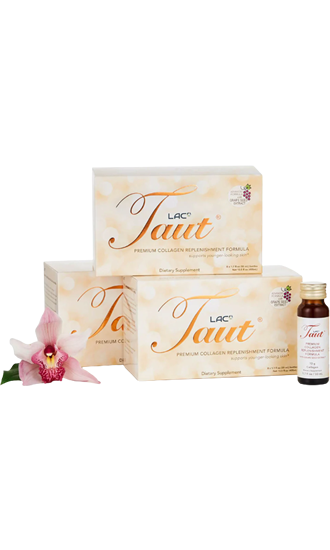
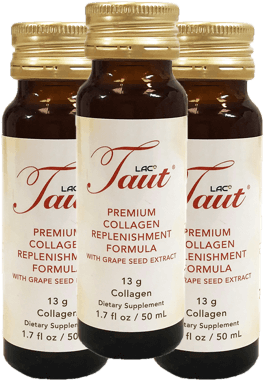
In Comes Taut Premium Collagen Advanced Formula
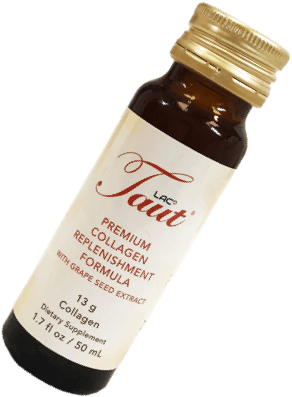
If you know me, you know I’m first, a supplement snob, and second, I’m a major fan of Taut’s Premium Collagen Advanced Formula. Dermatologist-tested, this extraordinary liquid supplement contains hyaluronic acid to help you truly get the best skin possible. Taut's hyaluronic acid is sourced from clinically-tested Hyabest HA, which provides the best results. With this daily shot of skin-loving nutrients, I’m always sure my skin is at its 100% potential!
As I mentioned before, those who use hyaluronic acid serum as part of their skin care routine will reduce wrinkles, improve elasticity, and increase skin moisture to have skin looking smoother than a baby’s bottom. These supplements help you look and feel it (trust me—even my mom noticed!).
Taut’s Premium Collagen Advanced Formula also contains another personal favorite and must-have: marine hydrolyzed collagen (potent concentration 13,000mg) to promote firmness. It works in synergy with elastin to promote elasticity, vitamin C (not to be confused with citric acid) to support collagen, and grape seed extract to protect skin cells against free radical damage (unstable atoms that damage cells and lead to wrinkling, hyper-pigmentation, and sagging) caused by pollutants, UV rays, and cigarette smoking.
This delicious orange-flavored drink is like a weapon against pretty much all of your skin concerns. With regular use of this hyaluronic acid booster, your skin will look radiant, fresh and, well, taut. No more sagging jowls or deep lines etched into your skin screaming your age to everyone in the vicinity. And it can help improve your joints too!
This is as close to the Fountain of Youth as you’ll ever get!
Hear What Customers Have to Say
It's pretty amazing!
My skin looks amazing, and I swear my cheeks look fuller/firmer.
Taut is the best for recovery from a long workout!
I'm an avid tennis player, sometimes my knees take a beating on the hard surface court. I discovered Taut and no more pain in my knees. After two years of using Taut, I believe it to be the best supplement to help me to recover from long and strenuous workouts. Additionally, my hair glows and my skin does too. I feel a lot younger when I use Taut everyday. I think I look younger too with healthy hair and skin. If I don't reorder Taut and run out, my knees start to ache and I don't feel as good in the morning when I wake up. Overall, I believe my flexibility has improved and absolutely no joint pains keeps me active and getting in an extra workouts which help my overall fitness and wellness. LOVE THIS PRODUCT!
Taut Collagen drink
Amazing!!!! I noticed a difference after 1 week :) I will definitely continue to order. The taste is great unlike most products. Thank you Taut ♥️ 100% Satisfied
Wow!!!!!
I am 42 years old, a mother of one and worked in hospitality specially clubs and hotel for over 20 years and I say all that to make a point of how much of a toll my lifestyle choices took on my skin. Now after only one month of taking the Taut collagen replenishment formula on a daily basis and I’ve seen changes..... tightness on my cheeks and the small lines around my eyes have diminished. Definitely a great purchase!!!!!
My favorite "skin food" brand ever!
I love the natural ingredients. You know exactly what is going into your body - the products are amazing!

SHOP TAUT TRANSFORMATION COLLECTIONS AND BEST SELLERS
To find out more about Taut Collagen products, contact us today! Our happy and helpful team is more than excited to tell you everything you need to know about these products!
Ready to experience the benefits for yourself? Shop our Liquid Collagen Drinks collection and find the right program for your skin goals.