Why Your Skin Changed Overnight in Your 40s (And What to Do About It)

| Quick Answer: Women can lose up to 30% of their skin's collagen in the first five years of menopause due to declining estrogen levels. This rapid collagen loss causes sudden skin thinning, dryness, and deep wrinkles. To counteract this, daily supplementation with high-dose marine collagen peptides (like Taut Premium Collagen) can stimulate fibroblasts to rebuild the dermal matrix, significantly improving skin hydration and elasticity within 8 to 12 weeks. |
If you have recently entered your 40s or 50s and felt like your skin changed almost overnight, you are not alone. Many women describe waking up one day to find that their previously firm, resilient complexion suddenly looks thinner, drier, and more prone to deep creasing. While it is easy to blame these sudden shifts on stress, lack of sleep, or simply getting older, the true culprit is often happening beneath the surface: a dramatic drop in estrogen and its direct impact on your body's collagen production.
The connection between your hormones and your skin's structural integrity is profound. As you transition through perimenopause and into menopause, the rapid decline in estrogen triggers an equally rapid decline in collagen. Understanding this biological mechanism is the first step toward effectively addressing it and restoring your skin's youthful vitality.
The Menopause Collagen Crash: Research shows that women can lose up to 30% of their skin's dermal collagen within the first five years after menopause. This accelerated loss directly correlates with the sharp decline in estrogen levels, leading to thinner skin, increased dryness, and the sudden appearance of deep wrinkles [1] [2].
The Estrogen and Collagen Connection Explained
To understand why your skin changes so rapidly during midlife, we have to look at how estrogen functions within the dermal layer. Estrogen is not just a reproductive hormone; it is a vital component of skin health. It binds to specific receptors in your skin cells, particularly the fibroblasts. Fibroblasts are the specialized cells responsible for synthesizing new collagen and elastin fibers.
When estrogen levels are high and stable, your fibroblasts are constantly stimulated to produce fresh, healthy collagen. This keeps your skin thick, hydrated, and bouncy. However, as you enter perimenopause—which can begin in your early to mid-40s—your estrogen levels begin to fluctuate and eventually plummet. Without that constant hormonal stimulation, your fibroblasts become sluggish. Not only does your body produce less new collagen, but the existing collagen matrix begins to break down at an accelerated rate.
This is why the symptoms of low estrogen often manifest first on your face. You might notice that your skin no longer bounces back from pillow creases in the morning, or that your usual moisturizers are no longer effective against the sudden, persistent dryness.
The 30% Drop: What Happens in the First Five Years
The most critical window for your skin's structural health occurs immediately following menopause. Clinical studies have consistently demonstrated that women lose approximately 30% of their skin's collagen content in the first five years post-menopause. After this initial dramatic drop, the decline stabilizes to a loss of about 2% per year [2].
This rapid depletion explains the "overnight" aging phenomenon many women experience. It is not a gradual, linear process; it is a steep cliff. Along with the loss of collagen, declining estrogen also reduces your skin's natural production of hyaluronic acid, the molecule responsible for holding moisture in the dermal layer. The combination of low collagen and depleted hyaluronic acid results in skin that is structurally weaker, visibly thinner, and significantly drier.
Lifestyle Factors That Accelerate Collagen Loss
While the hormonal shifts of menopause are inevitable, certain lifestyle habits can act as an accelerant, causing your collagen matrix to break down even faster. If you are already dealing with the effects of low estrogen, it is crucial to minimize these external stressors:
- Unprotected Sun Exposure: UV radiation is the number one external cause of collagen degradation. UV rays penetrate deep into the dermis, damaging existing collagen fibers and causing the accumulation of abnormal elastin.
- High Sugar Consumption: A diet high in refined sugars leads to a process called glycation. Sugar molecules attach to collagen proteins, forming advanced glycation end products (AGEs). This makes the collagen fibers stiff, brittle, and prone to breaking, which manifests as deep wrinkles and sagging skin.
- Chronic Stress and Cortisol: High levels of the stress hormone cortisol can actively break down collagen and inhibit the production of hyaluronic acid, exacerbating the dryness and thinning associated with menopause.
- Lack of Sleep: Your body's natural repair processes, including collagen synthesis, peak during deep sleep. Chronic sleep deprivation, a common symptom of perimenopause, robs your skin of this essential recovery time.
Nutrients That Support Collagen Synthesis
To combat the menopausal collagen crash, you need to provide your body with the right raw materials. While taking a high-quality collagen supplement is the most direct approach, your diet also plays a critical supporting role. Your fibroblasts require specific co-factors to successfully synthesize new collagen fibers:
- Vitamin C: This is arguably the most important co-factor for collagen production. Without adequate Vitamin C, your body simply cannot form stable collagen molecules. Citrus fruits, bell peppers, strawberries, and broccoli are excellent sources [3].
- Zinc and Copper: These trace minerals are essential for the cross-linking of collagen fibers, which gives the dermal matrix its strength and resilience. You can find them in nuts, seeds, lentils, and dark chocolate.
- Amino Acids: The primary building blocks of collagen are the amino acids glycine, proline, and hydroxyproline. Consuming high-protein foods like poultry, fish, eggs, and legumes ensures your body has a steady supply of these essential components.
How to Support Your Skin Through the Transition
While you cannot stop the biological clock, you can absolutely intervene to support your skin's collagen matrix during and after menopause. The key is to provide your body with the specific building blocks it needs to stimulate those sluggish fibroblasts and rebuild the dermal layer from the inside out.
This is where high-quality marine collagen supplementation becomes essential. Unlike topical creams that sit on the surface of the skin, liquid marine collagen peptides are small enough to be absorbed into the bloodstream and delivered directly to the dermis. Once there, they trigger a "wound healing" response, tricking your fibroblasts into producing new collagen fibers, even in the absence of high estrogen levels.
For women in their 40s who are just beginning to notice these changes, a strategy known as collagen banking—proactively building up collagen reserves before the steep menopausal drop—can be highly effective. But even if you are already post-menopausal, clinical research shows that consistent supplementation can significantly improve skin hydration, elasticity, and wrinkle depth [1].
When Will I See Results?
Rebuilding a depleted collagen matrix takes time and consistency. When taking a premium, high-concentration supplement like Taut® Premium Collagen Advanced Formula, here is the timeline you can generally expect:
- Weeks 1 to 4: The earliest changes are usually textural. As the collagen peptides and added hyaluronic acid begin to circulate, you will likely notice a significant improvement in skin hydration. Your skin may feel softer, less tight, and more comfortable throughout the day.
- Weeks 4 to 8: During this phase, the new collagen synthesis begins to visibly impact the skin's structure. You may observe increased firmness and a slight plumping effect, particularly around the cheeks and jawline. Fine lines may appear softer and less pronounced.
- Weeks 8 to 12+: This is when the most dramatic structural improvements occur. Clinical studies on marine collagen supplementation typically measure peak results at the 12-week mark. You can expect a visible reduction in the depth of deeper wrinkles, improved skin elasticity, and a more radiant, even skin tone [1].
How to Read a Collagen Label: Quality Indicators
Not all collagen supplements are created equal, and when you are fighting the steep decline of menopause, quality matters immensely. You need a supplement that is highly bioavailable and concentrated enough to force a physiological change. Here is what to look for on the label:
- Hydrolyzed Peptides: Ensure the label specifies "hydrolyzed collagen" or "collagen peptides." This means the large collagen protein has been broken down into smaller, easily absorbed molecules. Look for a low molecular weight (ideally under 5,000 Daltons) for maximum bioavailability [4].
- High Concentration: To see visible anti-aging results, especially during menopause, a high dose is required. Look for supplements offering at least 5,000mg to 10,000mg per serving.
- Marine Source: When comparing marine collagen vs bovine collagen, marine collagen (derived from fish) is widely considered superior for skin health. It consists primarily of Type I collagen, which makes up 85% of the collagen in human skin.
- Essential Co-factors: The best formulations include synergistic ingredients like Vitamin C, hyaluronic acid, and elastin to support the entire collagen synthesis process.
- No Artificial Fillers: Avoid products with artificial sweeteners, excessive added sugars, or unnecessary preservatives.
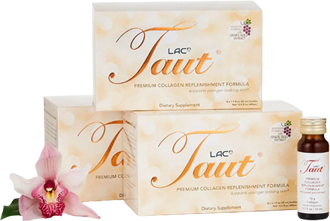
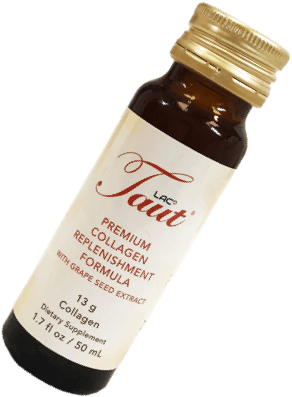
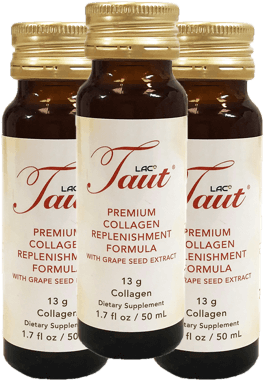
Taut® Premium Collagen Advanced Formula is specifically engineered to address severe collagen loss. Each tiny glass bottle delivers a massive 13,000mg dose of premium marine collagen peptides, sourced from wild-caught red snapper in the Indian Ocean. This clinical-strength dose is combined with elastin, hyaluronic acid, grape seed extract, and vitamin C—all the essential co-factors your fibroblasts need to rebuild a firm, youthful dermal matrix, regardless of your estrogen levels.
Frequently Asked Questions
Can collagen supplements replace the estrogen lost during menopause?
No, collagen supplements do not contain hormones and cannot replace lost estrogen. However, they provide the specific amino acid building blocks your skin needs to synthesize new collagen, helping to counteract the structural thinning and wrinkling caused by estrogen decline.
Is it too late to start taking collagen if I am already post-menopausal?
It is never too late. While starting early (collagen banking) is ideal, clinical studies have consistently shown that women in their 50s, 60s, and beyond experience significant improvements in skin hydration, elasticity, and wrinkle reduction after 8 to 12 weeks of daily marine collagen supplementation.
Why did my skin become so dry during perimenopause?
Estrogen plays a crucial role in stimulating the production of hyaluronic acid and natural oils (sebum) in the skin. As estrogen levels fluctuate and drop during perimenopause, your skin loses its ability to retain moisture effectively, leading to sudden and persistent dryness.
How much collagen do I need to take to see a difference in my skin?
To see visible anti-aging results, especially during or after menopause, a high-concentration dose is required. Clinical studies typically use doses ranging from 5,000mg to 10,000mg per day. Taut Premium Collagen provides 13,000mg per serving to ensure maximum absorption and efficacy.

|
About the RenewSkin Co Editorial TeamThe RenewSkin Co editorial team is dedicated to providing science-backed, clinically researched information on skin health, anti-aging, and collagen supplementation. Our content is rigorously reviewed to ensure accuracy and alignment with the latest dermatological research, helping women make informed decisions about their skincare journey through perimenopause, menopause, and beyond. |
References:
[1] Pu SY, Huang YL, Pu CM, Kang YN, Hoang KD, Chen KH, Chen C. Effects of Oral Collagen for Skin Anti-Aging: A Systematic Review and Meta-Analysis. Nutrients. 2023 Apr 26;15(9):2080.
[2] Viscomi B, et al. Managing Menopausal Skin Changes: A Narrative Review. PMC. 2025.
[3] DePhillipo NN, Aman ZS, Kennedy MI, Begley JP, Moatshe G, LaPrade RF. Efficacy of Vitamin C Supplementation on Collagen Synthesis and Oxidative Stress After Musculoskeletal Injuries: A Systematic Review. Orthop J Sports Med. 2018 Oct 25;6(10).
[4] Bianchi FM, Angelinetta C, Rizzi G, Praticò A, Villa R. Evaluation of the Efficacy of a Hydrolyzed Collagen Supplement for Improving Skin Moisturization, Smoothness, and Wrinkles. J Clin Aesthet Dermatol. 2022 Mar;15(3):48-52.