Jowls: Causes, Prevention, and the Best Treatments
 collagen — treatment for jowls" style="width:100%;height:auto;display:block;margin:0 0 28px 0;border-radius:6px;">
Quick Answer
Jowls are the sagging skin and fat that hang below the jawline. They form as we age due to a loss of collagen and elastin, thinning skin, and the downward shift of facial fat pads caused by gravity. You can tighten and lift jowls with clinical treatments like radiofrequency or ultrasound, and support skin firmness from the inside out with a high-quality liquid collagen supplement and daily sun protection.
A sharp, defined jawline is one of the universal hallmarks of a youthful face. But as the years pass, many of us notice the skin along our lower jaw beginning to soften, droop, and sag. These fleshy pouches are commonly known as jowls.
While jowls are a completely natural part of the aging process, they can significantly alter the shape of your face, turning a youthful "V" shape into a heavier, squared-off appearance. If you're wondering why jowls form and what you can do to lift and tighten your jawline, you're in the right place. Let's explore the causes, prevention strategies, and the best treatments available.
What Are Jowls?
The term "jowls" refers to the loose, sagging skin and tissue that falls below the jawline, typically on either side of the chin. Almost everyone develops some degree of jowling as they age, though the severity varies greatly depending on genetics, lifestyle, and skincare habits.
What Causes Jowls to Form?
Jowls are the result of several age-related changes happening simultaneously within the skin and the underlying facial structure:
- Loss of Collagen and Elastin: These two proteins are the scaffolding of your skin. Collagen provides firmness, while elastin allows the skin to snap back. As production declines with age, the skin becomes thinner, weaker, and unable to resist the pull of gravity.
- Fat Pad Descent: In our youth, fat is evenly distributed in the cheeks, keeping the face plump and lifted. Over time, these fat pads shrink and slide downward, pooling around the lower jaw and chin.
- Bone Loss: As we age, we actually lose bone mass in our facial skeleton, particularly in the jawbone (mandible). This means there is less structural support to hold the skin up.
- Sun Damage: UV exposure is the number one cause of premature aging. It destroys collagen and elastin fibers, accelerating the sagging process.
- Weight Fluctuations: Significant weight gain stretches the skin, and subsequent weight loss can leave behind loose, empty skin that sags along the jawline.
- Tech neck wrinkles: Constantly looking down at phones and computers can weaken the neck and jaw muscles, contributing to a drooping lower face.
How to Prevent Jowls
While you can't stop gravity or bone loss, you can take steps to preserve your skin's elasticity and delay the onset of jowls:
- Wear Sunscreen Every Day: Protecting your skin from UV rays is the most critical step in preserving your natural collagen and elastin. Apply SPF to your face, jawline, and neck daily.
- Maintain a Stable Weight: Avoid yo-yo dieting to prevent the skin from repeatedly stretching and losing its ability to bounce back.
- Use Firming Skincare: Incorporate ingredients like retinol, peptides, and Vitamin C into your routine to stimulate collagen production and protect against free radical damage.
- Practice Good Posture: Keep your head up and your phone at eye level to avoid weakening the muscles of the lower face and neck.
- Nourish Your Skin: Eat a balanced diet rich in antioxidants and amino acids to support cellular repair and skin health.
The Best Treatments for Jowls
If jowls have already formed, topical creams won't be enough to lift the sagging tissue. You need treatments that address the structural loss of collagen and volume.
1. Liquid Collagen Supplements (The Inside-Out Lift)
To fight sagging skin, you must rebuild the collagen matrix from within. A high-potency liquid collagen supplement delivers the necessary amino acids directly to the dermis, stimulating the body to produce new collagen and elastin.
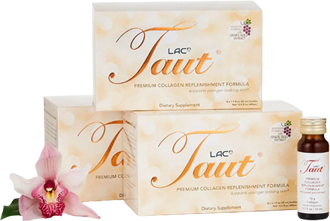
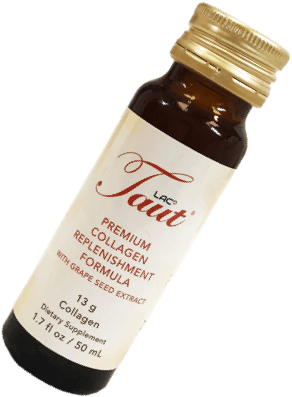
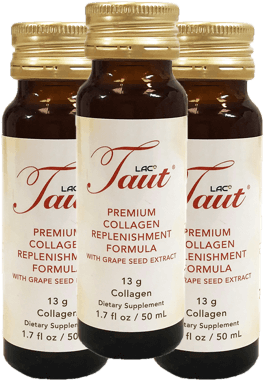
We recommend Taut Premium Collagen Replenishment Formula. Packed with 13,000mg of marine collagen peptides, hyaluronic acid, and elastin, this powerful formula is designed to restore skin thickness, improve elasticity, and provide a natural, full-body "lift." By strengthening the skin's foundation, Taut helps the skin resist gravity and visibly tightens the jawline over time.
2. Radiofrequency and Ultrasound (Ultherapy)
Non-invasive skin tightening devices use heat energy (either radiofrequency or focused ultrasound) to penetrate deep into the skin. This heat causes immediate tissue contraction and triggers a massive wound-healing response, resulting in significant new collagen production and a tighter, lifted jawline over 3 to 6 months.
3. dermal fillers
While it may seem counterintuitive to add volume to a sagging area, strategically placing dermal fillers along the jawline and in the cheeks can actually lift the skin and camouflage the appearance of jowls, restoring a straight, contoured jawline.
4. Thread Lifts
A thread lift is a minimally invasive procedure where a doctor inserts dissolvable, medical-grade threads under the skin to physically pull and lift the sagging tissue of the jowls. As the threads dissolve, they stimulate collagen production in the area.
5. Surgical Facelift or Neck Lift
For severe jowling, a surgical facelift or neck lift is the most definitive solution. A plastic surgeon removes excess skin and tightens the underlying muscles to completely restore the youthful contours of the lower face.
Conclusion: Reclaim Your Contours
Jowls may be a stubborn sign of aging, but they are not untreatable. By protecting your skin from the sun, exploring clinical tightening treatments, and rebuilding your collagen from the inside out with a premium supplement like Taut, you can lift, firm, and redefine your jawline.
Frequently Asked Questions
Can facial exercises get rid of jowls?
While facial exercises (face yoga) can help tone the underlying muscles, they cannot fix the primary causes of jowls: loss of collagen, thinning skin, and descending fat pads. In fact, excessive facial movements can sometimes exacerbate wrinkles. Skin tightening treatments and collagen supplementation are much more effective.
At what age do jowls usually appear?
Most people begin to notice the early signs of jowling in their late 30s or 40s as collagen production slows down. However, they typically become much more prominent in the 50s and 60s due to the cumulative effects of gravity, fat loss, and bone resorption.
Does losing weight help with jowls?
It depends. If your jowls are primarily composed of excess fat, losing weight may reduce their size. However, if you lose a significant amount of weight quickly, especially later in life, it can actually make jowls look worse by leaving behind loose, empty skin that lacks the elasticity to snap back.
Can collagen supplements tighten loose skin?
Yes, high-quality hydrolyzed collagen supplements can improve skin elasticity and firmness. By providing the body with a high concentration of collagen peptides, you stimulate the dermis to rebuild its structural matrix, which helps tighten loose skin and reduce sagging over time.
References
[1] Proksch, E., Segger, D., Degwert, J., Schunck, M., Zague, V., & Oesser, S. (2014). Oral supplementation of specific collagen peptides has beneficial effects on human skin physiology: a double-blind, placebo-controlled study. Skin pharmacology and physiology, 27(1), 47-55. https://pubmed.ncbi.nlm.nih.gov/23949208/
[2] Ganceviciene, R., Liakou, A. I., Theodoridis, A., Makrantonaki, E., & Zouboulis, C. C. (2012). Skin anti-aging strategies. Dermato-endocrinology, 4(3), 308-319. https://pubmed.ncbi.nlm.nih.gov/23467476/