Collagen vs Protein Powder (Which One Should You Actually Take?)

You're standing in the supplement aisle (or more likely, scrolling through 47 browser tabs at midnight), and the same question keeps circling back: collagen vs protein powder. Which one deserves your money? Which one actually works? And do you really need both, or is that just the supplement industry trying to double your cart total?
Here's the short version. They're both proteins. But they do wildly different things inside your body. Protein powder builds and repairs your muscles. Collagen rebuilds the stuff protein powder completely ignores, like your skin's structure, your joint cartilage, and the connective tissue holding everything together. Whether you've been Googling collagen peptides vs protein powder or collagen vs. protein powder, the answer starts with understanding that gap.
RenewSkin Co is a premium marine collagen skincare brand, and we've been helping women transform their skin and joints with science-backed collagen programs for years. So, everything we are going to cover comes from real customer results and a deep understanding of what these two supplements can (and can’t) do for your body.
By the time you finish this article, you'll know exactly which one matches your goals, which one you might be wasting money on, and whether stacking both actually makes sense. Let's break this down.
Key Takeaways
✓ Collagen is the specialist. It targets your skin, joints, hair, nails, and gut with amino acids (glycine, proline, hydroxyproline) that protein powders rarely contain.
✓ Protein powder is the workhorse. It delivers all nine essential amino acids your body needs for muscle protein synthesis and recovery.
✓ They are not interchangeable. Taking more whey will not improve your skin elasticity. Taking more collagen will not build lean muscle mass.
✓ Most people over 30 benefit from both, because your body's collagen production drops roughly 1% every year while your muscle-maintenance needs stay the same (or increase).
✓ Collagen fills the gap protein powder leaves wide open, and that gap gets bigger every year you ignore it.
The Core Comparison: Collagen vs Protein Powder Explained
Both are classified as ‘proteins’, but once they hit your bloodstream, they clock in for completely different shifts. Let’s look at each one on its own terms.
What Collagen Peptides Actually Do

Think of collagen protein as the contractor your body hires for very specific renovation projects. It's not trying to do everything. It's laser-focused on the structures that keep you looking and feeling put-together. That is your skin's firmness, your joint cushioning, your hair thickness, and even your gut lining. When you compare collagen protein vs protein powder, the difference starts right here.
What makes collagen peptides unique is their amino acid profile. They're loaded with glycine, proline, and hydroxyproline, three amino acids that make up the backbone of your body's connective tissue. Standard protein powders? They contain barely a trace of these. Your body uses these specific amino acids to support collagen synthesis, the process that keeps your skin elasticity intact and your joints comfortable during every morning run, yoga class, or just getting out of bed (we've all had those mornings).
Collagen supplements also win major points for convenience. Most collagen powder dissolves completely in hot or cold liquids without changing the taste or texture. Stir it into your morning coffee, your tea, a bowl of soup. Nobody will know it's there.
Now, the honest part. Collagen is an incomplete protein. It's low in tryptophan and methionine, which means it doesn't contain all nine essential amino acids your body needs for muscle protein synthesis. If your primary goal is building lean muscle mass after resistance training, collagen alone won't get you there. It's not designed to. And that's perfectly fine, because the protein powder vs collagen peptides conversation isn't about which one is "better." It's about which job you're hiring each one to do.
What Protein Powder Delivers

If collagen is the specialist, protein powder is the all-purpose workhorse. Its primary mission is simple. Deliver a complete amino acid profile (all nine essential amino acids, including the branched chain amino acids) so your muscles can repair, grow, and recover after you put them through the wringer.
Whey protein isolate sits at the top of the protein powder hierarchy for speed. Your body absorbs it rapidly after a workout, making it ideal for muscle recovery. Whey protein concentrate costs a bit less but absorbs slightly slower. Then there's casein, the slow-release option that keeps you full for hours (great for people trying to manage body weight and body composition). Plant-based protein powders, like soy protein and pea blends, give vegans and the lactose-sensitive crowd a solid alternative with a complete amino acid profile.
Protein powder also wins on cost. Gram for gram, a quality whey protein supplement delivers more protein per dollar than almost any other source. If you're chasing a high-protein diet or struggling to hit your daily protein intake through whole food alone, protein shakes close that gap fast.
But here's what protein powder can't do. It won't rebuild the collagen matrix in your skin. It won't cushion your joints. It won't improve skin elasticity or slow skin aging. Consuming whey protein, no matter how much of it, will not deliver the specific amino acids (glycine, proline, hydroxyproline) your connective tissue, bones, tendons, and ligaments need to stay resilient. Protein powder handles muscles. Everything else? That's a different department entirely.
So Which One Actually Wins?
Neither. And that's not a cop-out answer.
The collagen vs protein powder debate falls apart once you realize they were never competing for the same job. Asking which one is "better" is like asking whether a hammer is better than a screwdriver. Depends what you're building. Frame it as protein powder vs collagen, and the answer stays the same: different tools, different purposes.
Let's be direct about what each one will NOT do:
COLLAGEN WILL NOT:
-
Replace protein powder for muscle building
-
Give you a complete amino acid profile
-
Efficiently hit your daily protein intake goals
PROTEIN POWDER WILL NOT:
-
Rebuild your skin's collagen structure
-
Support your joint health in any targeted way
-
Improve your skin elasticity, hair strength, or nail quality
The real answer? If you train hard and care about how your body looks AND feels AND ages, you need both in your corner.
The Key Differences Between Collagen vs Protein Powder
So what exactly separates collagen powder from protein powder at the molecular level? Here's a side-by-side look at the collagen powder vs protein powder differences that actually matter for your buying decision.
your buying decision.
| Collagen | Protein Powder | |
|---|---|---|
| Protein Type | Incomplete protein | Complete protein |
| Key Amino Acids | Glycine, proline, hydroxyproline | All 9 essential amino acids (incl. BCAAs) |
| Primary Benefit | Skin, joints, hair, nails, gut | Muscle growth, repair, and recovery |
| Best For | Beauty, joint comfort, aging support | Muscle building, body composition |
|---|---|---|
| Taste / Mixability | Unflavored, dissolves invisibly | Flavored, shake-like texture |
| Digestion | Gentle, easy on most stomachs | Dairy-based options can cause bloating |
| Cost Per Gram | Higher per gram of protein | Lower per gram of protein |
| Missing Piece | Won't build muscle efficiently | Won't support skin or joint health |
Ready to experience the benefits for yourself? Shop our Liquid Collagen Drinks collection and find the right program for your skin goals.
Protein type is the big one. Protein powder (especially whey protein) is a complete protein, meaning it delivers all nine essential amino acids your body can't produce on its own. Collagen is an incomplete protein, rich in certain amino acids like glycine, proline, and hydroxyproline, but missing others. That's by design. Your body's most abundant protein, collagen, requires those specific building blocks to maintain skin health, joint health, and bone health.

A double-blind, placebo-controlled study published in Nutrients found that collagen peptide supplementation significantly improved skin elasticity and hydration while reducing wrinkle depth, benefits that whey protein supplementation simply doesn't deliver. When it comes to collagen peptide vs protein powder for skin outcomes, the research isn't even close. This is where the "all protein is the same" myth falls apart.
On the practical side, collagen powder dissolves cleanly in virtually anything. Coffee, tea, smoothies, soups. Most protein powders come heavily flavored and create thick, shake-like textures that limit where you can use them. Protein shakes are great post-workout. They're less great stirred into your morning espresso.
Cost per gram of protein tips in protein powder's favor. But cost per gram of targeted skin and joint health benefit? That's where collagen supplementation pulls way ahead, because protein supplements offer essentially zero support for those tissues.
So, when it comes to powder which is best? That depends on what your body is actually asking for. If you need a high-quality protein source to maintain muscle mass and support muscle mass gains after training, a solid whey protein powder paired with a healthy diet covers that base. It excels at tissue repair in your muscles and helps preserve lean body mass when you're cutting calories or aging out of your peak recovery years. No argument there.

But here's what that routine misses. Your body also needs to support collagen production at the structural level, and neither whey protein powder nor bone broth (which delivers unpredictable doses at best) can do that reliably. That's where collagen hydrolysate steps in. It's hydrolyzed collagen broken into peptides small enough for rapid absorption, giving your skin, joints, and connective tissue the targeted raw materials they actually need. Again, if they’re confusing, just think of your protein shake as the general contractor for muscle. Collagen hydrolysate is the specialist you bring in for the finishing work.
Why We Recommend Adding Collagen to Your Routine
Here's the thing most people miss about the collagen vs protein powder conversation. Almost everyone who works out already takes protein powder. Very few of those same people supplement with collagen. That gap is a problem, and it widens every single year past your mid-twenties.
Your body's collagen production starts declining around age 25. By the time you hit 40, you've lost a noticeable chunk of the collagen that keeps your skin firm, your joints comfortable, and your hair thick. No amount of whey protein addresses this decline. Not even close. Protein powder feeds your muscles. It leaves your skin, joints, bones, tendons, and ligaments completely on their own.
Smart collagen supplementation fills that gap. The research (one we mentioned earlier from Nutrients) points to hydrolyzed collagen peptides (broken down for rapid absorption) at clinically effective doses as the most reliable way to support your body's collagen production from within. Pairing hydrolyzed collagen with vitamin C further supports collagen synthesis, giving your body both the raw materials and the catalyst it needs.
So what does "clinically effective" actually look like on a label? Most collagen supplements on the market deliver somewhere between 2,000 and 5,000mg per serving. Research consistently shows that the real benefits kick in at 10,000mg and above. That's a massive gap between what most brands offer and what the science actually calls for.
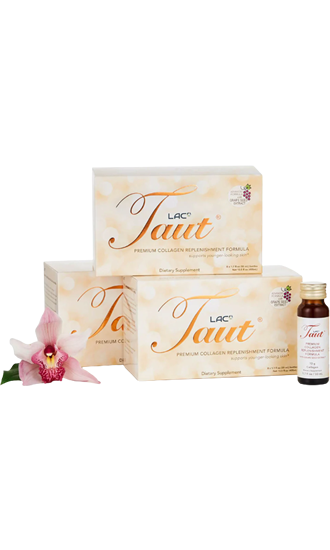
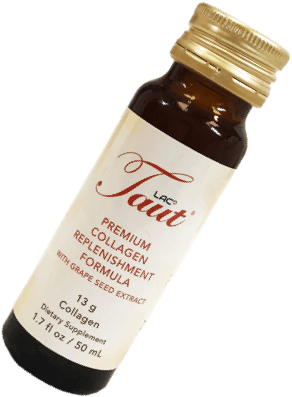
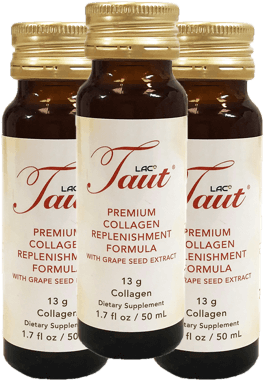
Taut Premium Collagen was built to close that gap. Each serving packs 13,000mg of hydrolyzed marine collagen, specifically Type I (the same type your skin and connective tissue are made of), sourced from wild-caught red snapper. But the potency alone isn't what unique. The formula pairs that collagen with vitamin C, hyaluronic acid, and grape seed extract, which means your body gets the raw material AND the cofactors it needs to actually put those amino acids to work. Think of it as handing your body a full toolkit instead of just the lumber. Explore the Taut Premium Collagen Drink here.

Prefer something you can throw in your gym bag right next to your protein powder? The Taut Collagen Powder Trio gives you that same marine collagen in a portable format, so you can stack both supplements in one morning without rearranging your entire routine.

This isn't about picking sides between collagen powder vs protein powder. Your protein shake handles one half of the equation. Collagen handles the half your shake was never engineered to touch. Anyone still framing protein powder vs collagen powder as an either/or decision is missing the bigger picture entirely.
Your Next Move
Here's your simple framework: keep your protein powder for muscle growth, recovery, and hitting your daily protein intake. Add collagen supplementation for everything protein powder leaves behind:
-
Your skin,
-
Your joints
-
Your hair
-
Your nails
-
The connective tissue that holds your entire body together.
The protein vs collagen powder question was never really a competition. It was always a collaboration.
Now, the practical part. If you're seeing deeper wrinkles or noticeable signs of aging, the Intense Transformation Program is where we tell most people to start. One bottle each night rebuilds your collagen stores at the pace your skin actually responds to. Once your skin catches up, the 2-box maintenance program keeps you there without the nightly commitment.
Dealing with dry, dehydrated skin instead? The Ultimate Transformation Program, paired with Taut Hydrate, tackles that from both sides.
Not sure which one fits your situation? Reach out to our team, and we'll help you figure it out.