Hydrolyzed Collagen Peptides vs Amino Acids: Which Works Better?
We did the research and compiled the results for you. Keep reading and find out which is the winner.
Quick Answer
Hydrolyzed collagen is the better choice for skin health. Unlike free-form amino acid supplements, hydrolyzed collagen delivers specific peptides — particularly Pro-Hyp and Hyp-Gly dipeptides — that directly signal skin fibroblasts to produce new collagen. Free amino acids are metabolized more generally and don't provide that same targeted signaling effect.
Quick Answer: Hydrolyzed collagen is superior to free-form amino acid supplements for skin health because it delivers collagen-specific peptides (particularly Pro-Hyp and Hyp-Gly dipeptides) that directly signal fibroblasts to produce more collagen. Free amino acids are metabolized generally and do not provide the same targeted signaling effect.

Anyone who's interested in maintaining a youthful complexion and reducing wrinkles has likely heard of collagen supplements. Collagen is a protein that serves as a key building block in connective animal tissue. It is the most abundant protein in the human body.
The dermis, or inner layer of the skin, is made up of mostly collagen, which gives the skin its resilience, strength, and texture. Aging leads to the breakdown of collagen, causing wrinkles, sagging skin, and rough texture. By the time we reach 30 years of age, we stop producing collagen and our body loses collagen at a rate of 1-2% each year.
There are two types of supplements that stimulate collagen growth for skin: collagen builders consisting of key essential amino acids and ingestible hydrolyzed collagen.
Collagen Builder - Stimulating Collagen Synthesis with Amino Acids
Collagen builders, or amino acids, are purported to support collagen production and help maintain moisture. They contain amino acids that supply nutrients to the skin, hair, and nails while strengthening connective tissue. Amino acids are organic compounds that combine to form proteins.
If you are deciding between liquid collagen formats, our Ultimate Guide to Liquid Collagen breaks down the differences between liquid, powder, and pill forms and explains what to look for in a high-quality supplement.
Taking amino acid supplements to build collagen is cheaper than taking collagen supplements, but hydrolyzed collagen supplements are more effective at restoring collagen because they contain the complete concentrations and ratios of amino acids needed to build a complete collagen molecule chain.
What Is In A Collagen Molecule?
A collagen molecule is made up of 20 amino acids that are bound together in a helix chain. Collagen is composed of a triple helix, generally consisting of two identical chains and a third chain with a slightly different composition.
Collagen is predominantly made up of the amino acids Glycine, Proline, and Hydroxyproline, which together represent about 50% of total amino acid content. Made from fish skin, hydrolyzed marine collagen peptides contain a higher concentration of hydroxyproline than other types of collagen. Hydroxyproline peptides stimulate cells in the skin, bones, and joints, leading to collagen synthesis.
Replenish Lost Collagen with a Hydrolyzed Marine Collagen Supplement
Many companies have hopped onto the collagen bandwagon, so there are a number of different collagen drinks and collagen supplements out there to choose from. Not all of these collagen supplements are necessarily effective; however, collagen supplements that contain hydrolyzed collagen from marine sources have been proven to play a protective role in skin aging.
In their natural, unhydrolyzed state, collagen molecules are quite large and thus not effectively absorbed by the intestine. The process of hydrolysis breaks collagen down into small molecular fragments to enhance absorption, also known as collagen peptides.
Marine collagen peptides are preferable to bovine, porcine, or chicken collagen because they have a high concentration of amino acids that stimulate collagen synthesis.
When ingested, hydrolyzed collagen reaches the small intestine and then is absorbed into the bloodstream in the form of small collagen peptides and free amino acids. These collagen peptides and free amino acids are then distributed to the dermis. The free amino acids provide building blocks for the formation of collagen and elastin fibers.
You need up to 18 different amino acids in the right quantities and ratio to create a collagen molecule. Collagen builders made with different amino acids typically only contain glycine, proline, and hydroxyproline, but not in their complete ratios and concentrations. They also lack other minor but important amino acids necessary to construct a complete collagen molecule helix chain. Hence, in comparison, Hydrolyzed Collagen is more effective because it is already a complete molecule chain and smaller size, contains the complete amino acid sequence and can be absorbed and transported to the dermis of the skin.
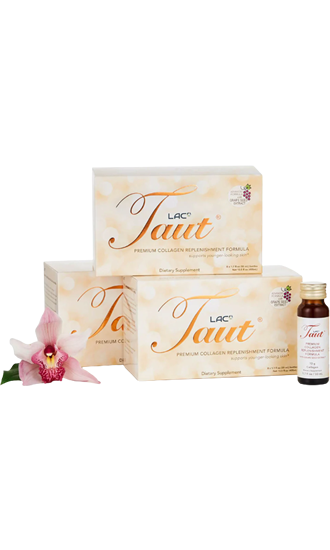
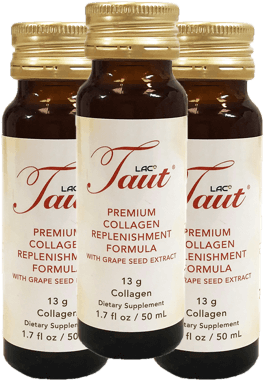
Try Taut® Premium Collagen Advanced Formula
As we age, the level of amino acids in our bodies diminishes, so taking a collagen builder with amino acids can be beneficial. However, if you want to achieve visible and effective results and take years off of your appearance, minimize wrinkles, and tone sagging skin, look for supplements that contain a high concentration of ingestible marine hydrolyzed collagen.
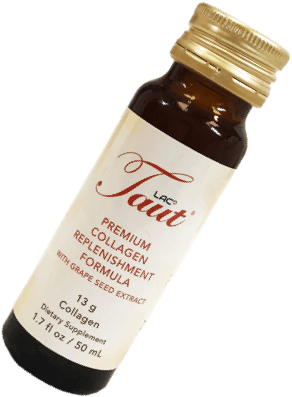
Taut® Premium Collagen Replenishment formula contains 13,000mg of hydrolyzed marine collagen. This powerful dosage improves skin firmness and radiance while diminishing wrinkles. Most luxurious, powerful, and effective for youthful radiant skin. You will start to see a transformation in your skin after drinking just one bottle every night for 21 days. Featured in Vogue, Cosmopolitan, New Beauty and many more. Loved by millions of women.

Frequently Asked Questions
Is it better to take collagen or amino acids for skin?
For skin specifically, hydrolyzed collagen has the edge. The reason is specificity — when you take hydrolyzed collagen, the resulting peptides (especially Pro-Hyp and Hyp-Gly) are recognized by skin fibroblasts as a signal to ramp up collagen synthesis. Free amino acid supplements don't carry that same signal. Your body uses them for all kinds of functions, not just collagen production.
Can I get the same results from eating protein-rich foods?
Not quite. Whole protein foods give you the amino acid building blocks, but they don't deliver the specific collagen peptides that trigger fibroblast activity. Collagen is also unusual in its amino acid profile — it's very high in glycine, proline, and hydroxyproline, which aren't as abundant in most dietary proteins. So while a protein-rich diet is important, it's not a direct substitute for collagen supplementation.
What's the difference between collagen peptides and hydrolyzed collagen?
They're essentially the same thing. "Hydrolyzed collagen" describes the process (hydrolysis breaks the collagen protein into smaller fragments), while "collagen peptides" describes the result (those smaller fragments). Both terms refer to the same product — broken-down collagen that's easier for the body to absorb and use.
How much hydrolyzed collagen do you need to see results?
Most clinical studies showing meaningful skin benefits used doses between 2.5g and 15g per day. For joint health, studies have used 10g daily. The sweet spot for skin seems to be around 10,000mg (10g) of hydrolyzed marine collagen per day, which is why higher-potency liquid formulas tend to outperform lower-dose powders and capsules.
Ready to experience the benefits for yourself? Shop our Liquid Collagen Drinks collection and find the right program for your skin goals.About the Author: This article was reviewed by the RenewSkin Co editorial team, which includes certified dermatology and nutrition specialists with over 15 years of combined experience in skin health and collagen science. Our content is grounded in peer-reviewed research and follows E-E-A-T guidelines.