Collagen for Skin & Collagen Facts
Quick Answer
Collagen is the most abundant protein in the human body and the primary structural component of skin. It forms a dense network of fibers in the dermis that gives skin its firmness, elasticity, and ability to bounce back. After age 25, the body produces roughly 1–1.5% less collagen per year — which is why skin gradually loses its density and resilience with age. Supplementing with hydrolyzed collagen can help slow and partially reverse this decline.

To learn more about how liquid collagen supplements can support your skin health, including dosage, bioavailability, and what to look for in a product, see our Ultimate Guide to Liquid Collagen.
Related reading: Discover the power of 8 wonder herbs that can repair your skin
What Is Collagen?
The most abundant protein throughout the human body, collagen offers support and strength to everything from our bones to our fingernails. Collagen not only anchors cells to each other, but it also forms sturdy fibril strands that work as supporting structures for the skin, bones, connective tissues, and more.
This strong, flexible protein is responsible for a lot in the human body, so what happens when it starts to deteriorate? The dermis layer contains over 70% collagen, and Type I and Type III collagen are the key foundational proteins for healthy, youthful-looking skin. While we’re born with an abundance of collagen in our skin, the body stops producing it in our mid to late 20s. From there, the collagen levels in our skin begin to drop by 1-2% each year. When collagen starts to decline with age, or with exposure to things like UV rays or cigarette smoke, our skin’s structural integrity is compromised. This is why aging skin begins to lose elasticity and firmness, as well as losing the radiance and fullness we associate with youthful skin. Collagen supplements can help.
How Is Collagen Manufactured?
Creating effective collagen supplements for the skin is more complex than one might think. Collagen molecules are too large to penetrate the surface of the skin, making it difficult for topical applications to replenish collagen in the skin. While moisturizers, serums, and collagen creams can support the body’s natural production of collagen, they can’t replace the collagen in your skin.
Knowing these collagen facts, what can be done? If you’ve researched collagen information, you’ve probably discovered that collagen is derived from the scales of fish, and from the bones and cartilage of cows, pigs, and chickens. Collagen supplements and a collagen-rich diet seem like the next obvious step, but the body still can’t absorb collagen molecules in their natural state.
However, researchers discovered how to break down the collagen molecule into “hydrolyzed collagen.” Using high-pressure steam, the molecule is broken down into tiny pieces small enough for our digestive enzymes to completely break down, allowing this hydrolyzed collagen to be absorbed into the bloodstream at a high rate.
Why Is Collagen Used for Anti-Aging Nutrition and Supplements?
Once the collagen molecule has been broken down into pieces that can be absorbed by the bloodstream, this essential protein can be used in supplements to help replenish collagen in the body. Collagen supplements for skin can increase the appearance of skin’s elasticity, firmness, and hydration, while reducing the appearance of fine lines and wrinkles. Your skin will look younger and healthier, and you’ll be able to recover your skin’s natural glow.
Does Collagen Provide Other Health Benefits?
In addition to the visible benefits of using collagen for skin, studies show taking collagen supplements could offer other health benefits. Some studies have shown that collagen supplements may help treat osteoarthritis. Because these supplements allow collagen to accumulate in the cartilage, researchers believe this can help decrease the painful symptoms of osteoarthritis and can improve joint function. Collagen can also help your gut function more effectively, reducing leaky gut and potentially helping your body naturally repair the lining of your gastrointestinal tract so it works properly. Finally, if you’ve noticed that your nails and hair have started to weaken and break easily, consuming more collagen can support your body’s production of this structural protein, reinforcing hair and nail strength.
Why Is Taut® Collagen the Best Choice for Collagen Nutritional Supplements?
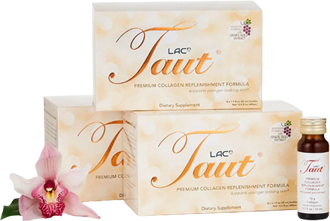
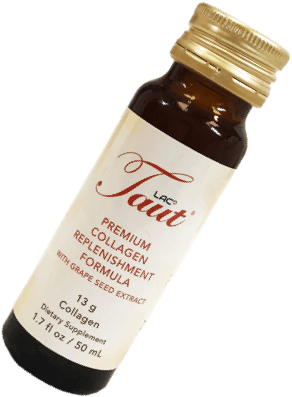
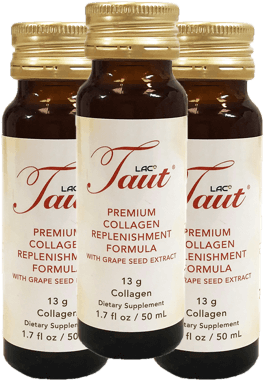
Each 1.7oz bottle of Taut® Collagen contains 13,000mg of hydrolyzed marine collagen—that’s 2-6 times the concentration found in other brands. Our collagen is safely sourced from deep-water red snapper fish and produced under environmentally friendly ISO-9001 certified production. Taut® Collagen guarantees the highest degree of purity and effectiveness, and does not contain pork, chicken, or beef. It’s also chemical, preservative, allergen, and gluten free.
Containing 90% Type I and 10% Type III collagen, the high dose of digestible collagen included in the Taut® Collagen formula has an over 90% absorption rate. Clinical studies show it helps support your skin’s collagen production to promote firmer, smoother, younger-looking skin. Taut® Collagen supplements for skin also contains hydrolyzed marine elastin—another essential skin protein responsible for elasticity—to help improve the look of skin’s elasticity and suppleness, while fighting sagging skin. Other active ingredients like vitamin C, CoQ10, hyaluronic acid, salmon milt DNA, ceramides, and grape seed extract protect against free radicals and help support and replenish collagen in the body so your skin looks renewed with frequent use.
Radiant, youthful skin starts from within. Experience the transformative power of Taut® Collagen.
Frequently Asked Questions About Collagen and Skin
What does collagen actually do for your skin?
Collagen forms the structural scaffolding of the dermis — the layer of skin beneath the surface. It gives skin its firmness, density, and ability to spring back after being stretched or compressed. When collagen levels are high, skin looks plump, smooth, and resilient. As collagen declines with age, the dermis loses its structural support, which leads to sagging, thinning, and the formation of wrinkles.
At what age does collagen start to decline?
Collagen production begins to slow in the mid-20s — earlier than most people expect. The decline is gradual at first, roughly 1–1.5% per year. It accelerates significantly after menopause in women, when estrogen levels drop and collagen production can fall by up to 30% in the first five years. By the time visible aging appears, the underlying collagen loss has been happening for years.
What destroys collagen in the skin?
Several factors accelerate collagen breakdown beyond the natural aging process: UV radiation (the single biggest external factor), smoking, high sugar intake (which causes glycation, a process that stiffens and degrades collagen fibers), chronic stress (which elevates cortisol, a known collagen inhibitor), and poor sleep. Protecting against these factors while supplementing to replenish collagen from within is the most effective combined approach.
Does collagen in skincare products actually work?
Topical collagen products have limited effectiveness for structural skin improvement because collagen molecules are too large to penetrate the skin barrier. They can provide temporary surface hydration and a smoothing effect, but they don't reach the dermis where structural collagen is produced. Oral collagen supplementation — particularly hydrolyzed marine collagen — is significantly more effective for rebuilding the dermis from within.