Is Collagen Halal? Marine vs. Bovine Explained
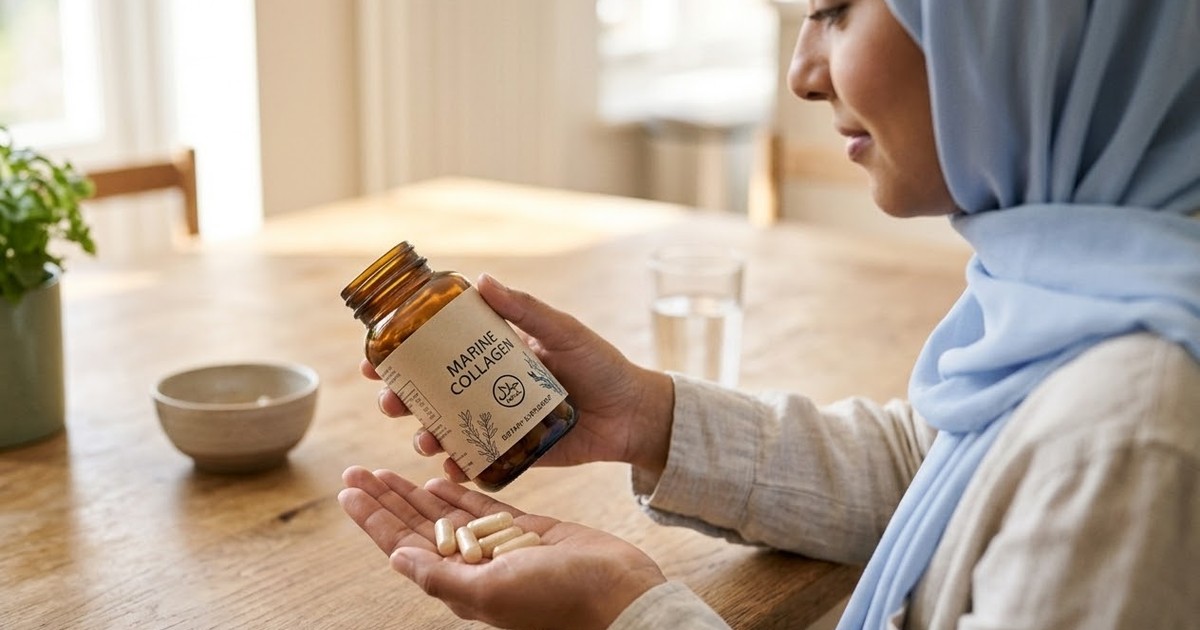
Quick Answer: Collagen is halal only if it comes from a halal source, and this is where marine collagen has an edge. Fish collagen is generally accepted under most interpretations, while bovine collagen depends on whether the cattle were slaughtered to halal standard, and porcine, or pork, collagen is never halal. The safest move is to look for a certified halal product, not just a label that says "marine."
If you keep halal, you already know the drill: check the source, check the certification, and never assume. Collagen is no different, but it comes with a twist that actually works in your favor. Some collagen is clearly fine, some clearly is not, and a little knowledge makes the whole aisle easier.
Let me break it down so your next purchase is a no-brainer.
What Makes Collagen Halal or Not
Collagen comes from the connective tissue of animals or fish. Whether it is halal comes down to two things: what animal it came from, and how that animal was processed.
- Marine collagen comes from fish. Fish do not require ritual slaughter under Islamic dietary law, so marine collagen is widely considered halal.
- Bovine collagen comes from cattle. It is halal only if the cattle were slaughtered according to halal standards.
- Porcine collagen comes from pigs and is never halal.
The takeaway: marine is the easy yes, bovine needs a second look, and porcine is an automatic no.
Why Marine Collagen Is the Safer Bet
For anyone keeping halal, marine collagen quietly solves the problem. Because it is fish-derived, it sidesteps the slaughter question entirely. That is a big reason it has become the go-to for people who want collagen without the label anxiety. If you want the fuller picture, our guide on boosting collagen naturally pairs well here.
1. Look for Certification
A halal certification logo is the cleanest signal. "Marine" is a good start, but a certification removes the guesswork.
2. Read the Source Line
The label should say marine or fish, or specify bovine with halal processing. If it says porcine or just "animal collagen," keep looking.
3. Ask When It Is Unclear
A quick email to the brand usually gets you the source and certification. Good brands answer this question happily.
Frequently Asked Questions
Is marine collagen halal?
Marine collagen from fish is generally considered halal by most authorities, since fish do not require ritual slaughter. Still, look for halal certification to be certain. Pairing it with hyaluronic acid can round out your skin routine.
Is bovine collagen halal?
Bovine collagen is halal only if the cattle were slaughtered according to halal standards. Without that, or a halal certification, it is best to avoid it.
Can I trust "halal" on the label?
A real halal certification from a recognized body is the strongest signal. A self-declared "halal" with no certification deserves a closer look.
Ready to Support Your Skin Without Compromise?
Keeping halal should not mean sitting out the collagen conversation, and it does not have to. Marine collagen gives you a clean, widely accepted path, so you can build a daily ritual that fits your values and your skin at the same time. Our Intense Transformation program is built on premium marine collagen, which is why it fits so naturally into a halal-conscious routine. Starting early with collagen banking is the smart long-term play, and you can browse the full program lineup to find your fit. Ready to transform your skin on your terms?
References
- Proksch, E., Segger, D., Degwert, J., Schunck, M., Zague, V., & Oesser, S. (2014). Oral supplementation of specific collagen peptides has beneficial effects on human skin physiology: a double-blind, placebo-controlled study. Skin Pharmacology and Physiology, 27(1), 47–55.
- Ganceviciene, R., Liakou, A. I., Theodoridis, A., Makrantonaki, E., & Zouboulis, C. C. (2012). Skin anti-aging strategies. Dermato-endocrinology, 4(3), 308–319. https://pubmed.ncbi.nlm.nih.gov/23467476/
You Might Also Like

Understanding the Difference Between Marine Collagen and Bovine Collagen
Marine collagen , which comes from fish, and bovine collagen , which comes from cows, are two of the trendiest forms of this supplement. But can both help you meet your beauty goals? Or is one a better choice over the other? Let’s break down the difference between these two types of collagen supplem

How to Boost Collagen Naturally: The Complete Guide
Quick Answer: To boost collagen naturally, you must combine a diet rich in collagen-building amino acids (like bone broth and lean proteins) with essential cofactors like vitamin C, zinc, and copper. For the most significant and visible anti-aging results, clinical studies show that supplementing wi

Collagen and Hyaluronic Acid: Should You Take Both?
Quick Answer: Yes, collagen and hyaluronic acid work well together and are often taken side by side. Collagen supports your skin's structure and firmness, while hyaluronic acid draws in moisture for a plumper, more hydrated look.