Collagen and Hyaluronic Acid: Should You Take Both?

Quick Answer: Yes, collagen and hyaluronic acid work well together and are often taken side by side. Collagen supports your skin's structure and firmness, while hyaluronic acid draws in moisture for a plumper, more hydrated look. Together they cover the two things skin wants most: support and hydration.
Here's a question that follows people around the skincare aisle: do you really need both hyaluronic acid and collagen? If you've spent even five minutes comparing labels, you've seen collagen cheered for firmness and hyaluronic acid for hydration, and quietly wondered whether you're supposed to pick a side.
Good news: you don't have to choose a team. They're not rivals, they work together. Think of collagen as the scaffolding and hyaluronic acid as the cement (or, in this case, the hydration that keeps skin plump and comfortable on top of it). Let's break down what each one actually does.
What Each One Does
Here's the simple version, no science degree needed.
Collagen is the structure. It's the protein that keeps skin firm, so it doesn't look thin or saggy. As you age, your body makes less of it, and skin slowly loses that support.
Hyaluronic acid is the moisture. It pulls water in and holds onto it, which is what gives skin that plump, dewy, well-hydrated look.
Two different jobs, both worth having. And as we age, we lose a little of each, which is why you see them sold side by side so often.
Why They Work Better Together
Here's why they're better as a pair. Firmness and hydration aren't the same thing. One holds your skin up, the other fills it with water. On their own, each does half the job. Together, skin looks smoother, softer, and more radiant than either could manage alone.
A Simple Daily Ritual That Combines Both
If you'd rather not juggle two bottles, we made it easy. Our Intense Transformation program pairs marine collagen with hyaluronic acid in one daily ritual, so you get both without having to think about it. One step a day, no ratios to work out.
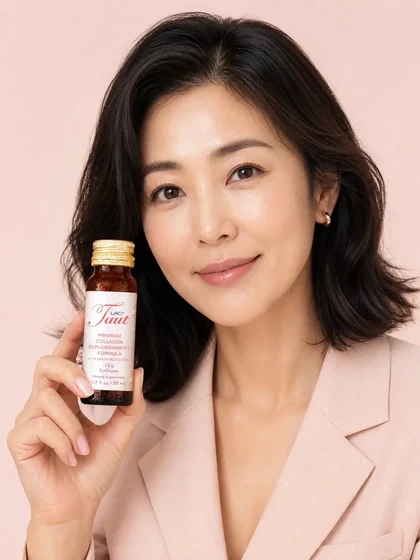
Prefer to mix and match? Our Taut Liquid Collagen Drink and Taut Hyaluronic Acid are made to work side by side, and our 24-Day Skin Transformation Challenge wraps whichever you pick into a simple three-phase routine (Refresh, Renew, Restore).
Many people tell us their skin looks more hydrated and feels more supported after staying consistent, though results vary from person to person.
Frequently Asked Questions
Can I take collagen and hyaluronic acid together?
Yes, they're safe together. They do different jobs, so they don't compete. Collagen works on structure, hyaluronic acid on moisture.
Which is better for wrinkles, collagen or hyaluronic acid?
You don't have to pick. Hyaluronic acid plumps fine lines with surface hydration, while collagen supports firmness over time. That's exactly why most people use both.
How long do results take?
Hydration from hyaluronic acid can feel noticeable quickly. Firmer-looking skin from collagen builds more gradually, over weeks to months with consistent use.
So, Do You Have to Choose?
You really don't. These two are a natural pair, and the nice part is you don't have to work out the ratios yourself. Our Intense Transformation program pairs marine collagen with hyaluronic acid so one simple daily ritual covers both structure and hydration, no guesswork needed. Ready to give your skin both sides of the story?
References
- Proksch, E., Segger, D., Degwert, J., Schunck, M., Zague, V., & Oesser, S. (2014). Oral supplementation of specific collagen peptides has beneficial effects on human skin physiology: a double-blind, placebo-controlled study. Skin Pharmacology and Physiology, 27(1), 47–55. https://pubmed.ncbi.nlm.nih.gov/23949208/
- Ganceviciene, R., Liakou, A. I., Theodoridis, A., Makrantonaki, E., & Zouboulis, C. C. (2012). Skin anti-aging strategies. Dermato-endocrinology, 4(3), 308–319. https://pubmed.ncbi.nlm.nih.gov/23467476/
You Might Also Like

What Is Hyaluronic Acid, Its Benefits, & What Does It Do (Side Effects, Definition)
Hyaluronic acid has one of those intimidating, lab-coat names that makes it sound way more complicated than it actually is. But here's the thing, it's just a naturally occurring compound your body already makes, and when it comes to skin care, it's one of the hardest-working ingredients you can find

How to Use Hyaluronic Acid: Serum Uses & When You Can Apply It On Your Face Everyday
Hyaluronic acid supplements have become the new it-girl in the realm of cosmetics. While most of us rush to the ingredients lists on the back of beauty products to make sure it's there, many don't actually know what it does or even how to use it. Also referred to as HA for short, hyaluronic acid is

Hyaluronic Acid: What You Should Know
Related reading: What Is In Your Skin Care Products? Active Ingredients You Should Know Sagging skin, wrinkles, and joint pain are issues that commonly plague us as we age. These problems might seem unrelated, but they can all be treated with a substance that’s naturally present in our bodies called